

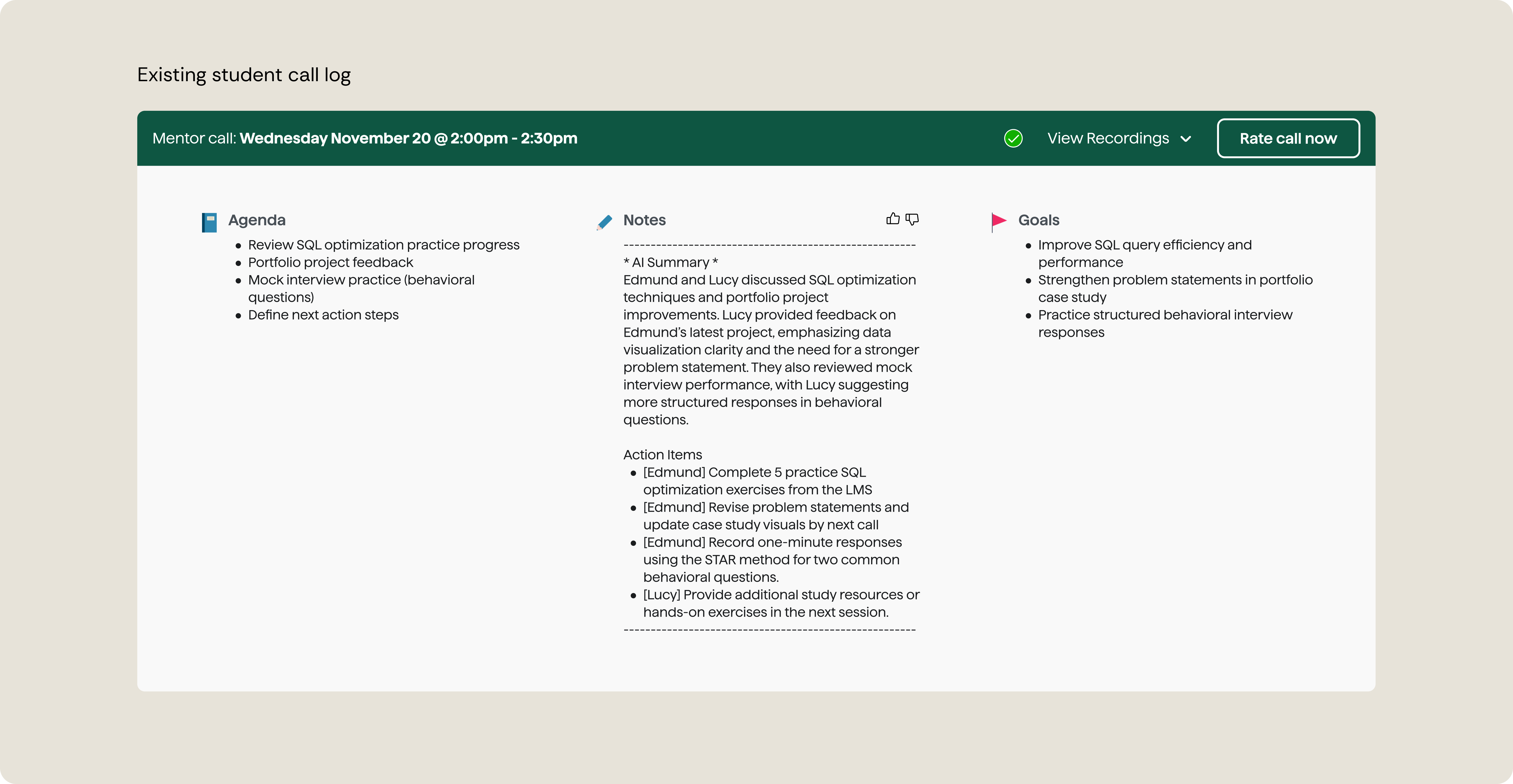
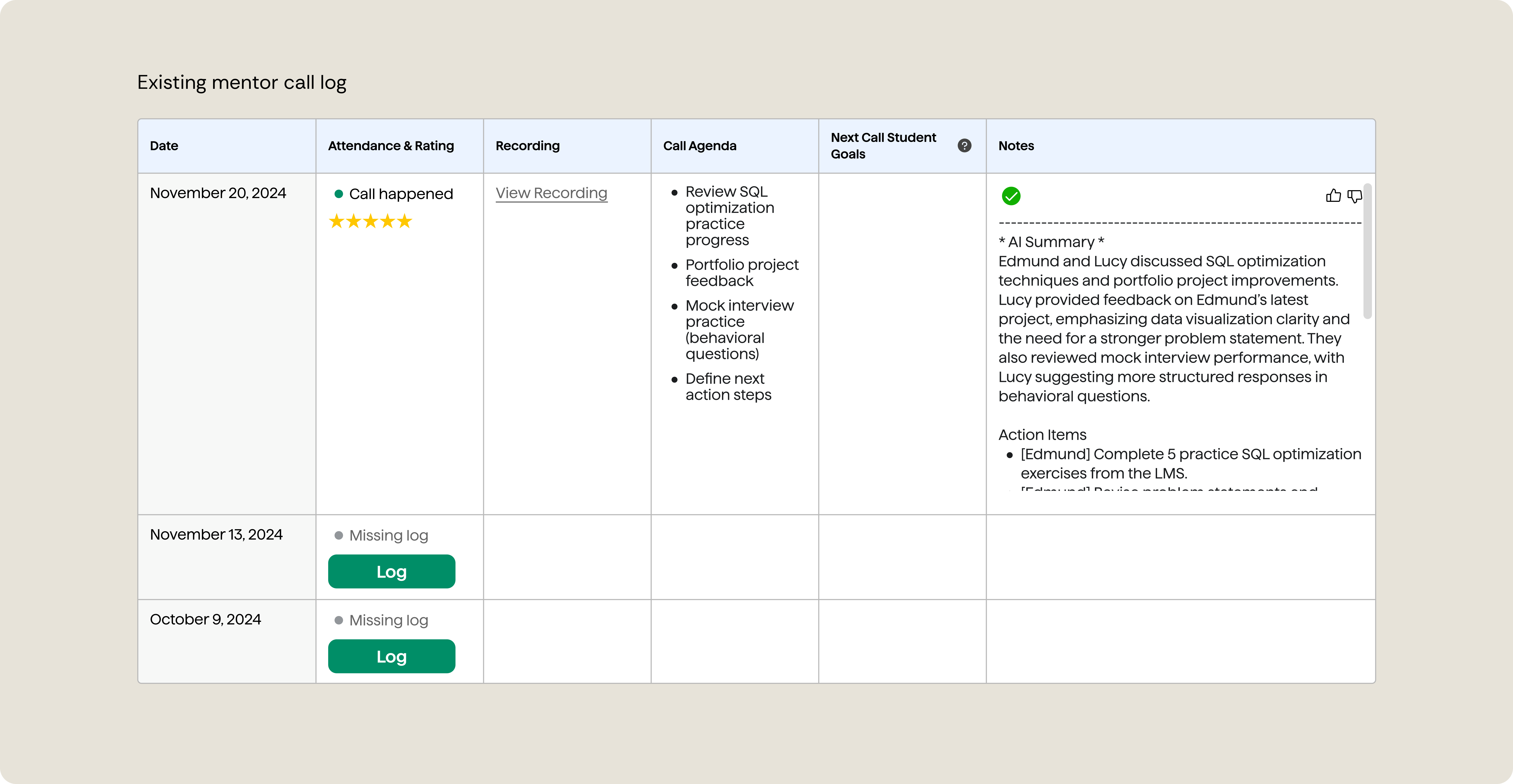
Springboard’s original learning platform gave students and mentors a place to manage their calls. They could see upcoming and past sessions and return to details from previous conversations.
When we started moving programs from our own platform into Canvas, we needed to figure out how that experience would come with us.
This also gave us a chance to think beyond mentorship. Students interact with different people throughout their program, including advisors and career coaches, and many of those conversations share similar needs. We wanted to start with mentorship while creating something that could eventually grow to support other types of student calls.
At the time, I was the only product designer at Springboard and was balancing several projects related to our move to Canvas.
While I was focused on other priorities, my PM, Chris, used Figma Make to start exploring what a new version of the mentorship experience could look like.
By the time I joined the project more closely, there was already an interactive concept we could react to together.
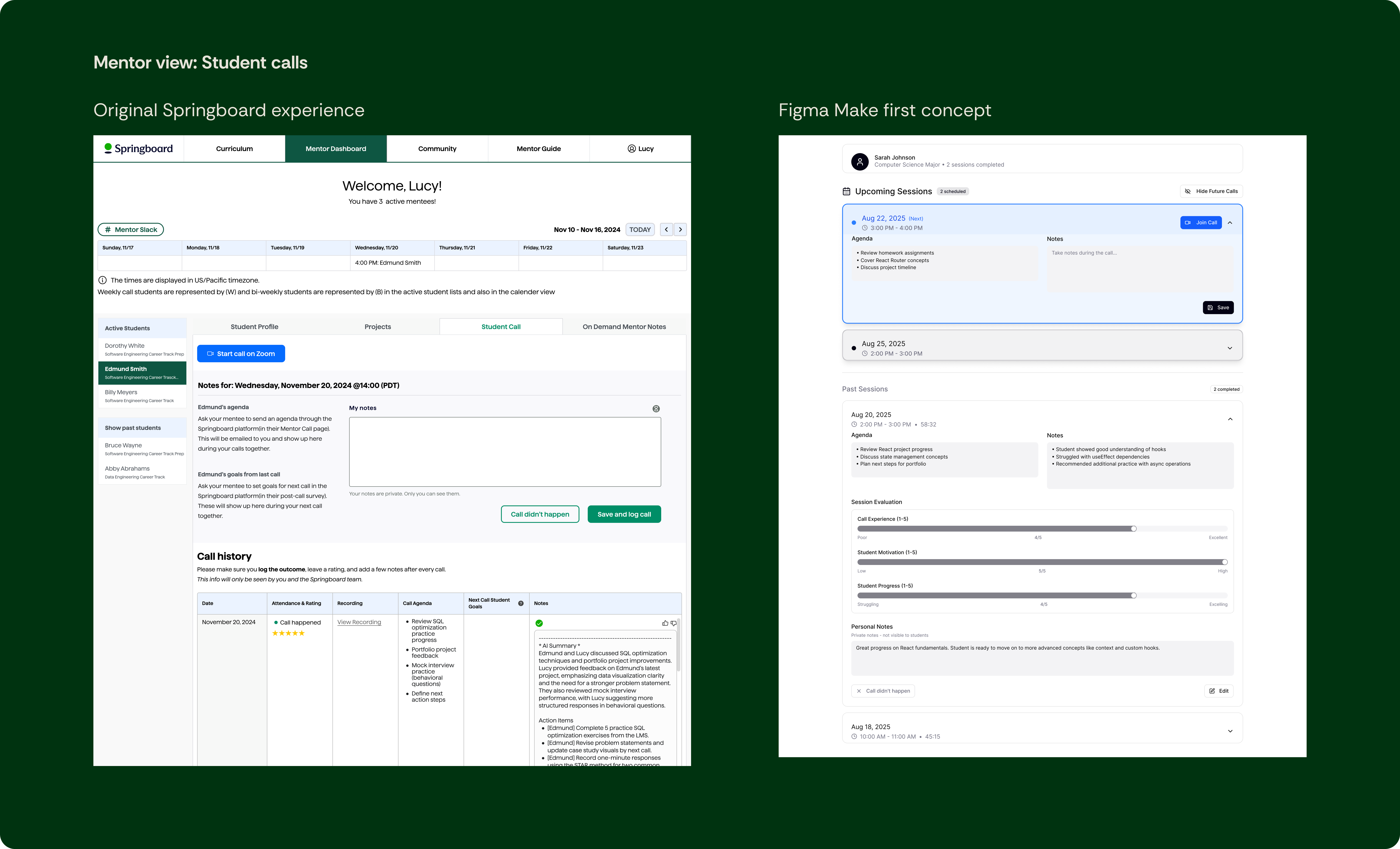
Exploring how the existing mentorship experience could evolve as we moved from Springboard’s platform into Canvas.
Rather than starting with a blank Figma file, I could start asking questions about something that was already on the screen.
I reviewed the concept with Chris and helped work through the UX, visual hierarchy, interaction patterns, and how the experience would need to adapt across different users and call states. We continued iterating from there as the experience became more defined.
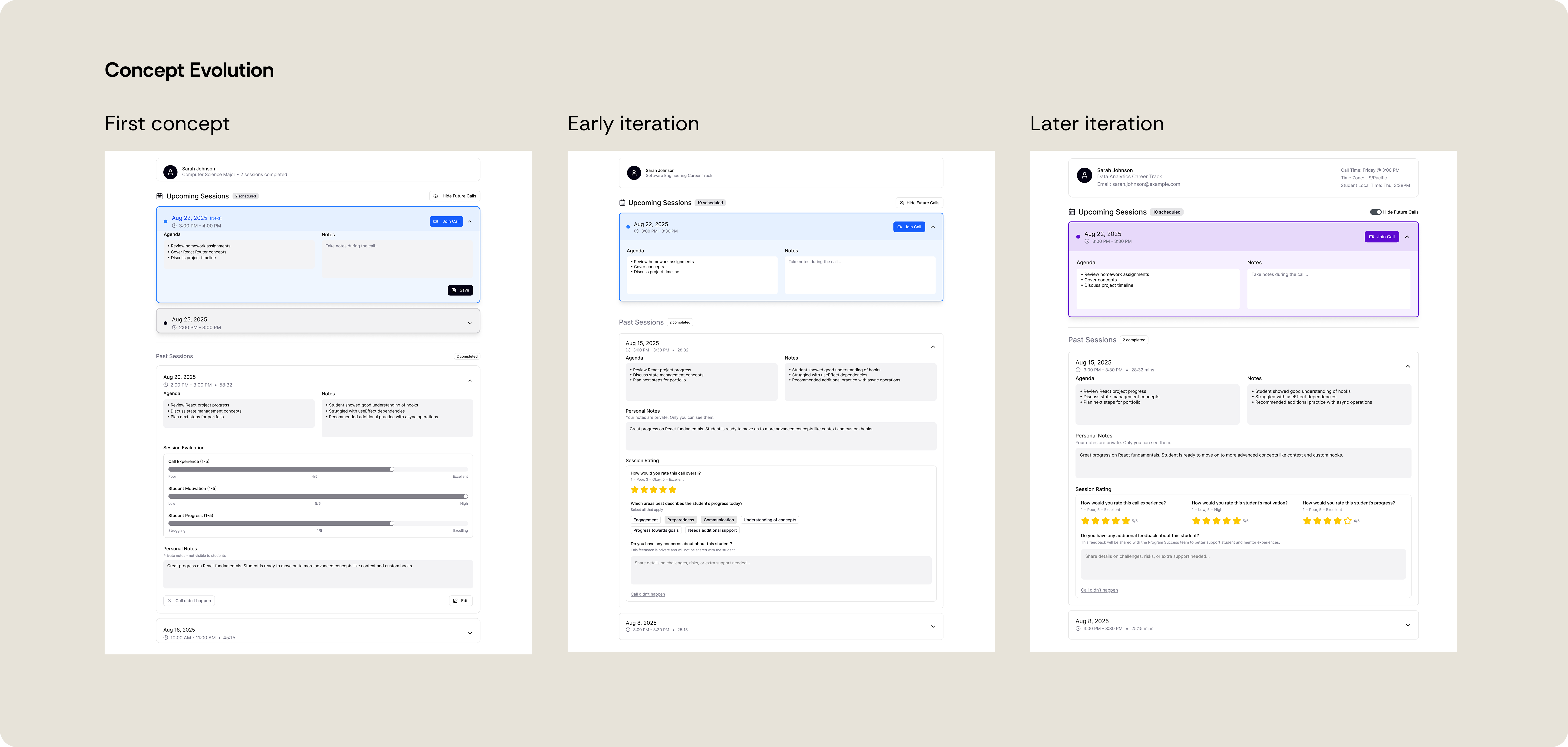
Figma Make gave us an early direction. From there, we worked through the details and refined the experience in Figma.
As the screens developed, I started noticing how many patterns were shared across the experience.
Student and mentor views used many of the same building blocks: dashboard, call information, cards, tables, tabs, notes, ratings, and different component states.
I started pulling those patterns out of individual screens and exploring how they could work as reusable components. Since we are already thinking about the future support experiences beyond mentorship, I wanted the UI to have enough structure to grow with them.
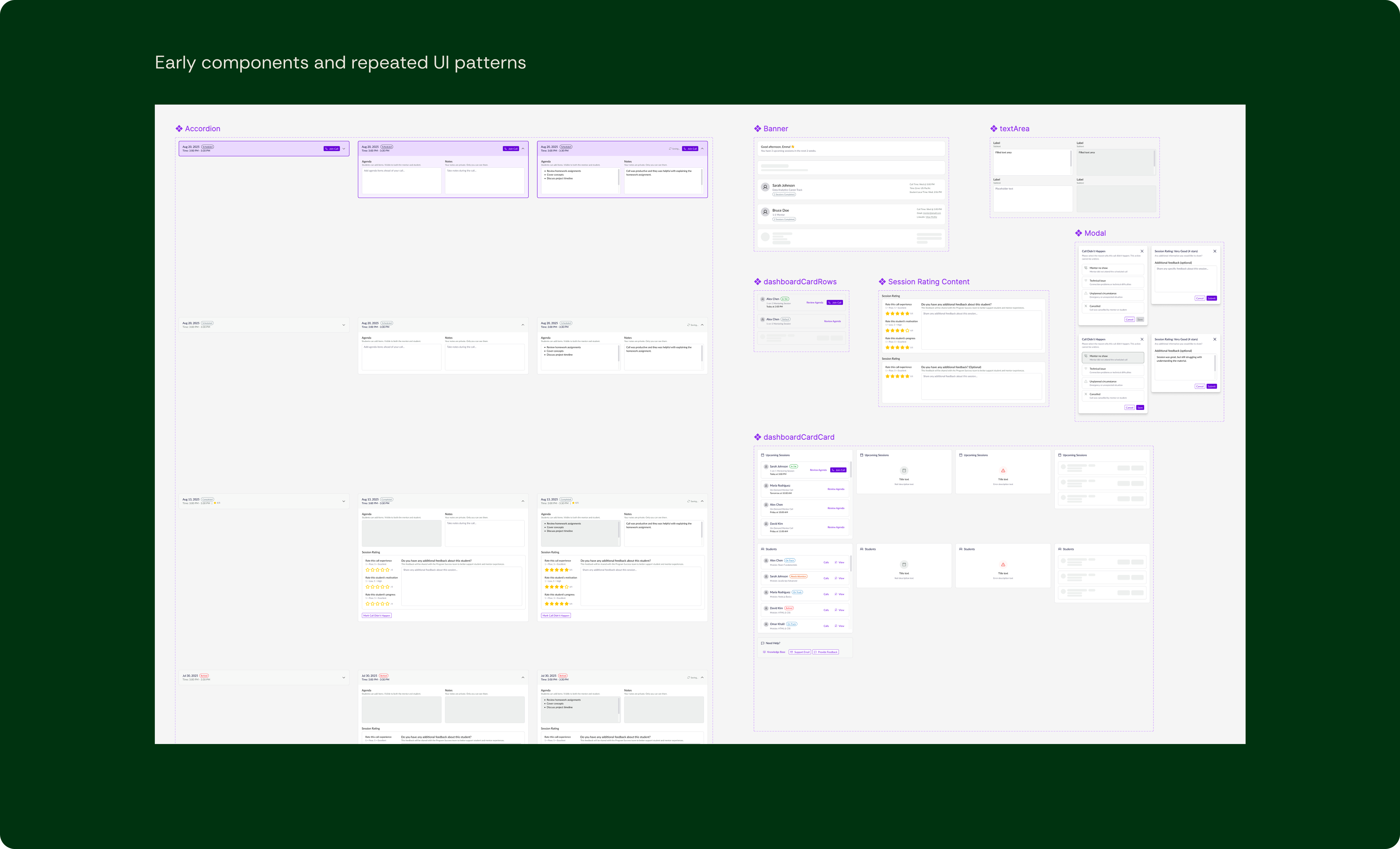
Pulling repeated UI patterns into reusable components that could scale across the experience.
I also explored creating a small component library for our Canvas integrations, with shared layouts, variants, and documentation that Design and Engineering could reuse instead of rebuilding similar patterns for each new tool.
We eventually decided to use Ant Design v4 as our foundation instead.
Our internal Springboard design system was still incomplete, and Ant Design already had a much broader set of established components that we could work with.
I brought the Ant Design library into our Figma file and rebuilt the core dashboard and call-profile templates with it. I also organized the main components I used so the remaining screen variations could follow the same structure.
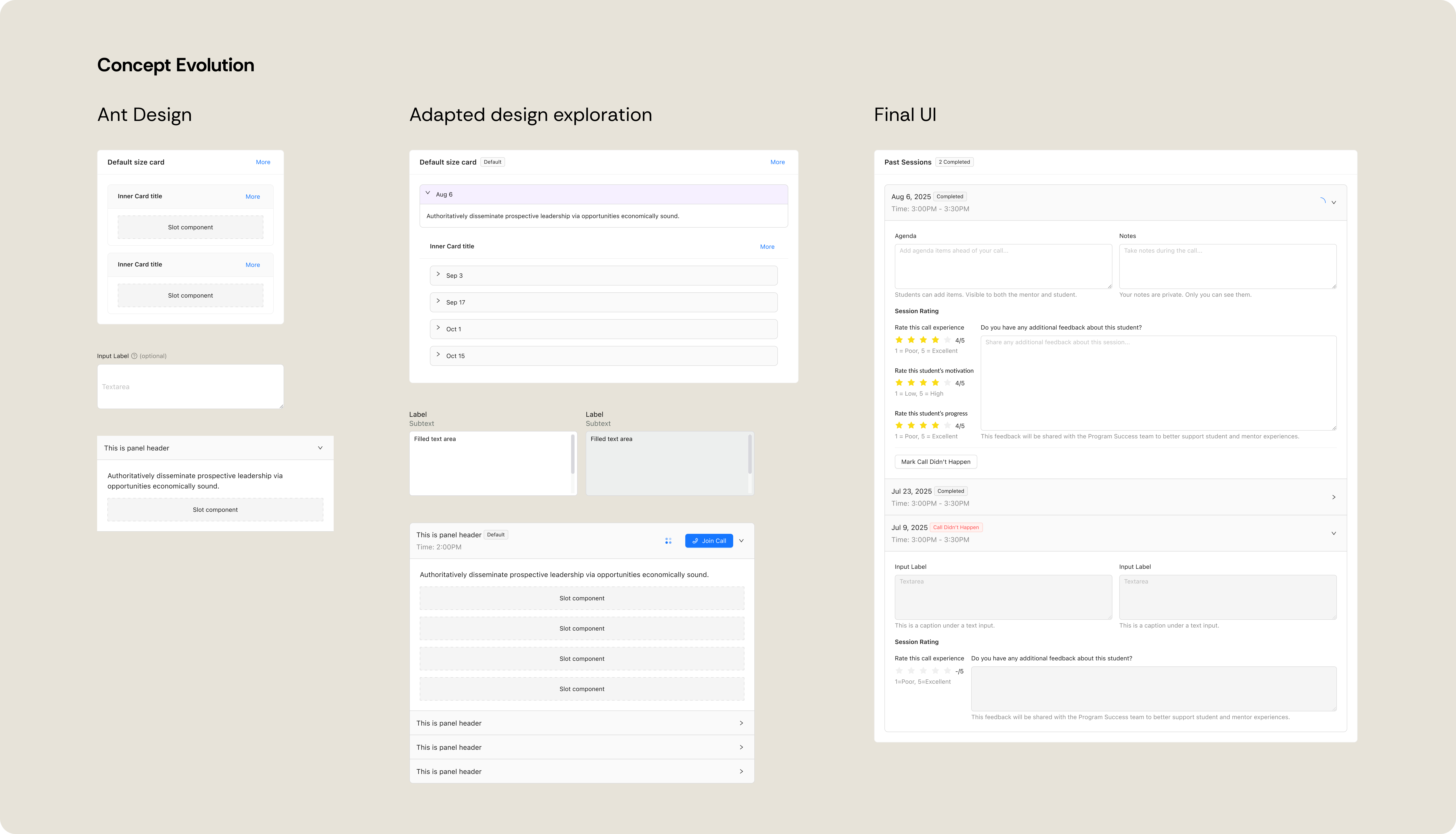
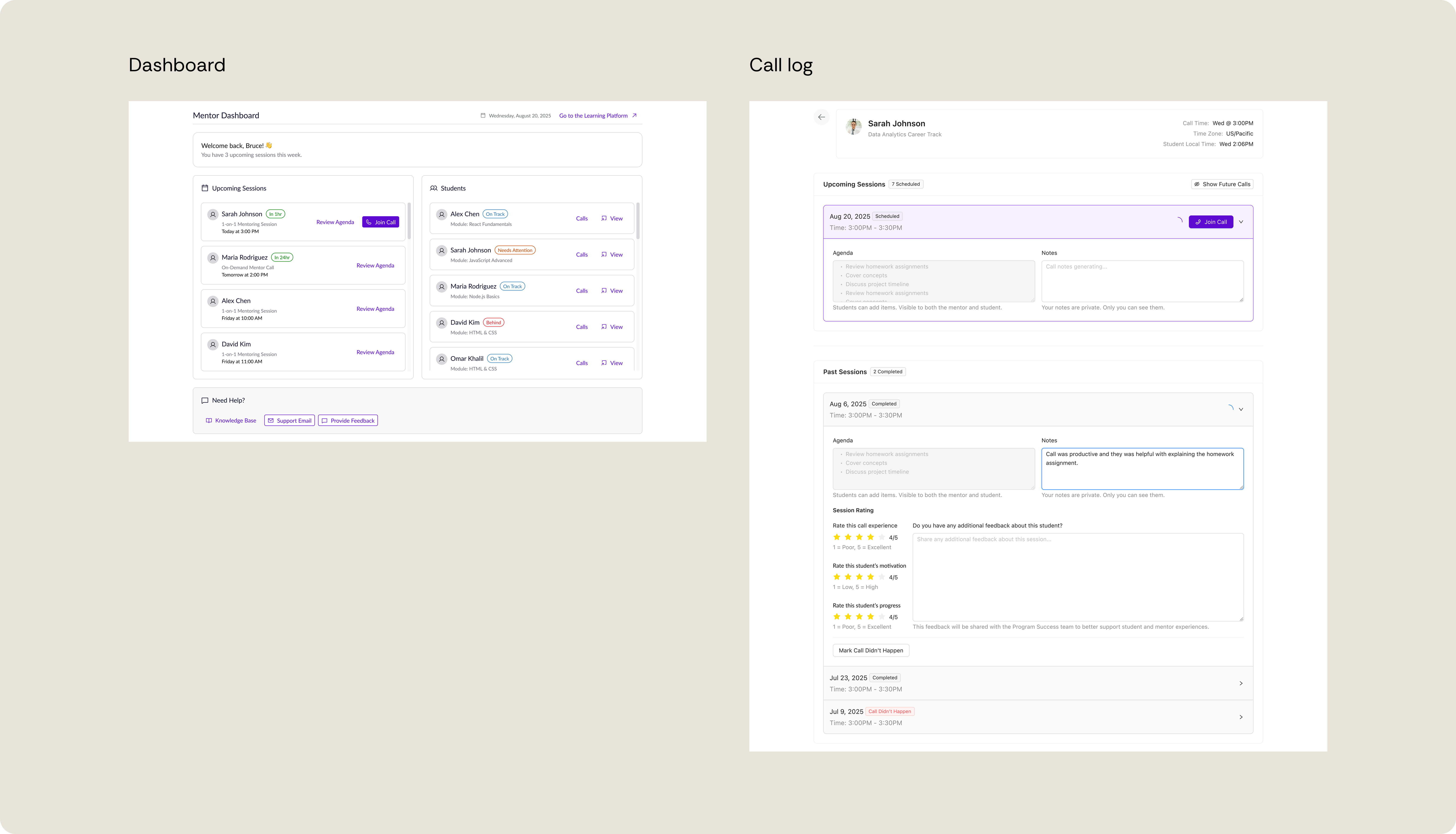
Using an existing system gave us a stronger foundation without spending time rebuilding components that already existed.
Instead of using AI as a design assistant or a tool alongside my design process, our starting point was an interface my PM had generated with Figma Make.
I ended up liking that part of the project!
Figma Make gave Chris a way to explore an idea while my attention was elsewhere. When I joined, we already had something tangible to discuss, question, and improve.
There was still plenty of design work ahead of us. I worked through the experience in more detail, refined the UI, thought about how its patterns could scale, and eventually rebuilt the designs around a component system that made more sense for implementation.
The project made me more interested in what happens when AI helps more people participate in the early stages of design. For our team, it meant we could get to the conversation faster and spend more time figuring out how the experience should actually work.
